

All
How Long Do Dentures Last? Lifespan & Replacement Guide for Singapore Patients (2026)
Mar
Dentures are one of the most reliable and widely used tooth replacement solutions for missing teeth. Whether someone has lost teeth due to gum disease, severe tooth decay, injury or ageing, dentures help restore chewing ability, speech clarity and confidence when smiling.
In Singapore, where daily life revolves around social dining, professional interaction and multicultural community engagement, maintaining healthy teeth—or well-functioning dentures—is important for both health and quality of life.
One of the most common questions patients ask is:
- How long do dentures last?
- When should dentures be replaced?
- What factors affect denture lifespan?
- How can dentures last longer?
Understanding Dentures and Their Role in Tooth Replacement
Dentures are custom-made removable dental appliances designed to replace missing teeth and surrounding tissues.
They help restore several important oral functions:
- Chewing food comfortably
- Speaking clearly
- Supporting facial muscles
- Maintaining natural smile aesthetics
Modern dentures are typically made from materials such as:
- Acrylic resin bases
- Porcelain or composite artificial teeth
- Flexible polymer materials
- Metal frameworks for partial dentures
Advances in dental technology have made dentures more comfortable, durable and natural-looking than ever before.
Average Lifespan of Dentures
Dentures are not permanent dental appliances. Over time, they experience natural wear and changes in fit due to jawbone and gum changes.
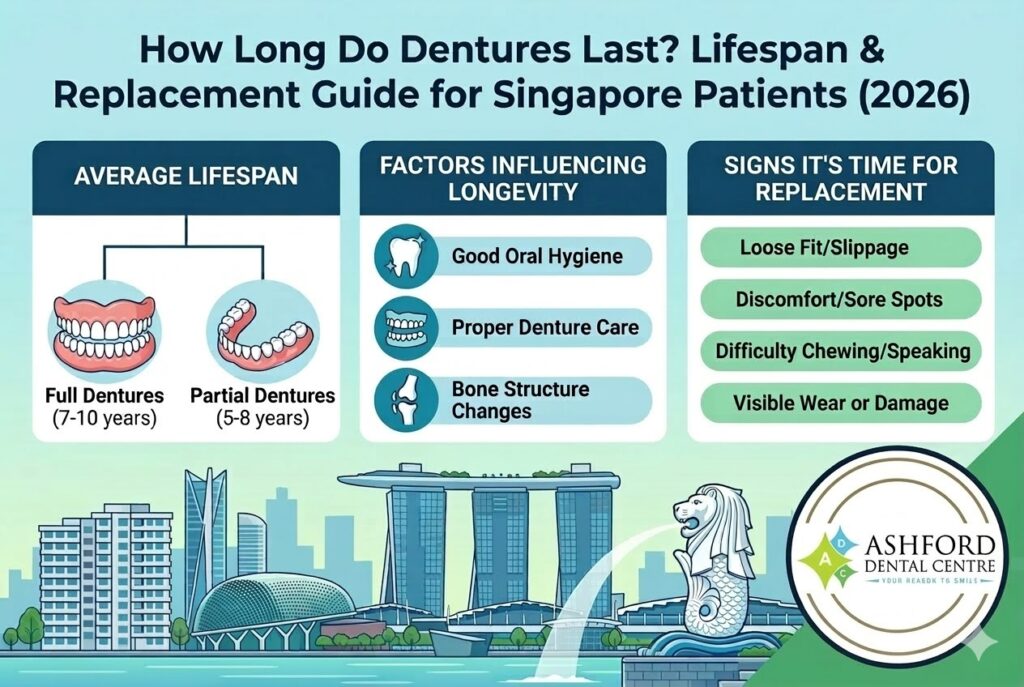
On average, dentures last between:
5 to 10 years
However, their lifespan varies depending on several factors, including:
- Type of denture
- Material quality
- Daily care habits
- Changes in jawbone structure
- Regular dental check-ups
Some high-quality dentures may last longer with proper maintenance, but dentists generally recommend evaluating dentures every 5 to 7 years for replacement.
Lifespan of Different Types of Dentures
Different types of dentures have slightly different durability and longevity.
Full Dentures
Full dentures replace all teeth in the upper or lower jaw.
Average lifespan: 5–10 years
Over time, natural bone changes may cause full dentures to become loose, requiring adjustments or replacement.
Partial Dentures
Partial dentures are used when some natural teeth remain.
Average lifespan: 5–8 years
Because partial dentures attach to natural teeth, their lifespan may depend on the health of those supporting teeth.
Flexible Dentures
Flexible dentures are made from soft thermoplastic materials.
Average lifespan: 5–8 years
Although flexible dentures resist cracking, they may lose shape over time due to material flexibility.
Implant-Supported Dentures
Implant-supported dentures are attached to dental implants placed in the jawbone.
Average lifespan:
- Denture component: 10–15 years
- Dental implants: 20 years or longer with proper care
Implant-supported dentures generally offer the longest-lasting tooth replacement option.
Why Dentures Do Not Last Forever
Even the best dentures eventually require replacement due to several factors.
Natural Changes in Jawbone and Gums
After tooth loss, the jawbone gradually shrinks over time.
This process, known as bone resorption, changes the shape of the gums and affects how dentures fit.
Poorly fitting dentures can cause:
- Discomfort
- Difficulty chewing
- Speech problems
Regular dental check-ups help detect these changes early.
Wear and Tear Over Time
Dentures experience daily wear from:
- Chewing food
- Cleaning and brushing
- Normal usage
Artificial teeth may gradually wear down, reducing chewing efficiency.
Staining and Discolouration
Over time, dentures may develop stains from:
- Coffee
- Tea
- Smoking
- Food pigments
Although cleaning can reduce staining, severe discolouration may require denture replacement.
Damage or Cracks
Dentures may become damaged due to:
- Accidental drops
- Excessive biting pressure
- Material fatigue
Even small cracks can affect denture stability and hygiene.
Signs You May Need New Dentures
Several warning signs indicate that dentures may need adjustment or replacement.
Common Signs Include
- Dentures feel loose or unstable
- Difficulty chewing food
- Gum irritation or sore spots
- Clicking sounds while speaking
- Visible cracks or damage
- Changes in facial appearance
If you experience these symptoms, it is important to consult a dentist for evaluation.
Denture Relining vs Denture Replacement
Sometimes dentures do not need full replacement.
Instead, dentists may recommend denture relining.
Denture Relining
Relining involves reshaping the inner surface of the denture to fit the gums better.
This can extend denture lifespan for several years.
Denture Replacement
Replacement may be necessary when:
- Dentures are severely worn
- Artificial teeth are damaged
- Dentures no longer fit properly
- The denture structure becomes weak
How to Make Dentures Last Longer
Proper care can significantly extend denture lifespan.
Clean Dentures Daily
Dentures should be cleaned daily using:
- A soft denture brush
- Non-abrasive denture cleaning solution
Regular cleaning prevents plaque buildup and staining.
Avoid Using Regular Toothpaste
Many toothpastes contain abrasive particles that may scratch denture surfaces.
Use denture-specific cleaners instead.
Remove Dentures at Night
Removing dentures before sleeping allows the gums to rest and reduces infection risk.
Dentures should be stored in water or denture cleaning solution overnight.
Handle Dentures Carefully
Dentures can break if dropped.
Cleaning them over a towel or basin filled with water can reduce damage risk.
Visit the Dentist Regularly
Regular dental check-ups allow dentists to:
- Check denture fit
- Detect oral health issues
- Adjust dentures if necessary
Dentists often recommend annual denture evaluations.
Denture Lifespan and Singapore Lifestyle
Singapore’s unique lifestyle and environment can influence denture longevity.
Food Culture
Singapore’s famous foods—such as satay, chilli crab and char kway teow—require strong chewing ability. Proper denture fit ensures patients can enjoy these foods comfortably.
Professional and Social Life
In Singapore’s competitive professional environment, maintaining clear speech and confident smiles is important. Well-maintained dentures help preserve both.
Ageing Population
Singapore has a rapidly ageing population. As more seniors rely on dentures, proper maintenance and timely replacement are essential for long-term oral health and nutrition.
Why Choose Ashford Dental Centre for Denture Care in Singapore
Ashford Dental Centre provides Personalized care for patients seeking denture replacement, denture adjustments and long-term denture maintenance.
Our clinics offer:
- Experienced restorative dentists
- Custom-designed full and partial dentures
- Advanced dental technology
- Professional denture fitting and adjustments
- Patient-focused care
We focus on ensuring dentures remain comfortable, functional and natural-looking.
How Ashford Dental Centre Can Help
Dentures play an important role in restoring oral health and confidence. However, like any dental appliance, they require proper care and periodic replacement.
Ashford Dental Centre helps patients maintain healthy smiles through:
- Denture assessments
- Denture relining
- Denture repairs
- New custom dentures
Our clinics are conveniently located across Singapore:
If your dentures feel uncomfortable or worn,
📅 Book an appointment to explore professional denture care and replacement options in Singapore.
Book an
Appointment
Please fill out the booking form and one of our customer service executives will contact you within a day. Alternatively you may call any of our locations, whatsapp us or drop us an email at info@ashforddental.com.sg
