

All
How to Care for Dentures: Cleaning & Maintenance Tips (Complete Guide for Singapore Patients)
Mar
Dentures are one of the most effective solutions for replacing missing teeth. Whether you wear full dentures, partial dentures or implant-supported dentures, proper denture care is essential to keep them clean, comfortable and long-lasting.
In Singapore, where food culture plays a central role in daily life—from hawker centre favourites like laksa, satay, chilli crab and roti prata to busy professional lifestyles—maintaining denture hygiene is crucial for both oral health and confidence in social interactions.
Many denture wearers often ask important questions:
- How should dentures be cleaned properly?
- How often should dentures be cleaned?
- Can I sleep with dentures overnight?
- What is the best way to store dentures?
- How can I make dentures last longer?
Why Proper Denture Care Is Important
Dentures replace missing teeth, but they still require regular cleaning and maintenance. Without proper care, dentures can accumulate bacteria, plaque and food particles, which may lead to oral health problems.
Poor denture hygiene can cause:
- Bad breath (halitosis)
- Gum irritation and infections
- Denture stomatitis (fungal infection)
- Plaque buildup on dentures
- Reduced denture lifespan
According to dental health research, denture wearers who maintain good hygiene practices experience fewer oral infections and better long-term denture comfort.
For Singapore residents—where climate humidity can encourage bacterial growth—regular denture cleaning becomes even more important.
Understanding Different Types of Dentures
Before discussing care tips, it is helpful to understand the different types of dentures commonly used.
Full Dentures
Full dentures replace all teeth in the upper jaw, lower jaw, or both. They sit directly on the gums and restore a full smile.
Partial Dentures
Partial dentures are used when some natural teeth remain. They attach to existing teeth with clasps or connectors.
Implant-Supported Dentures
These dentures are anchored to dental implants placed in the jawbone, providing additional stability.
Each type of denture requires regular cleaning and proper maintenance to ensure durability and hygiene.
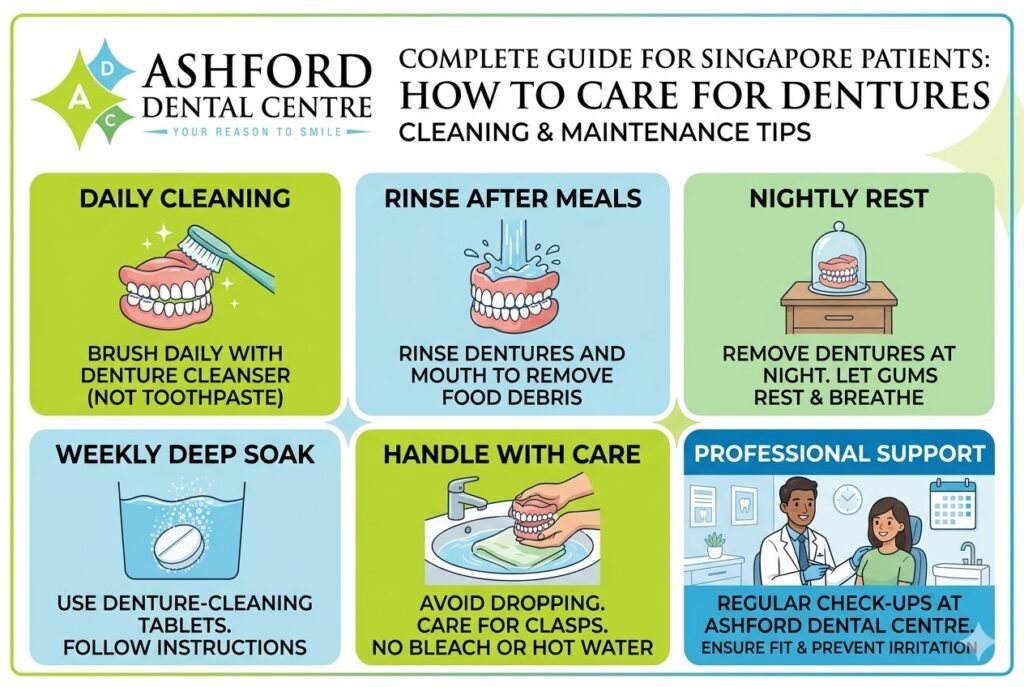
Daily Denture Cleaning Routine
Dentures should be cleaned every day to prevent plaque buildup and maintain oral health.
Rinse Dentures After Eating
After meals, remove your dentures and rinse them under running water. This helps remove food particles that may become trapped under the denture.
This simple habit helps prevent:
- Bad breath
- Gum irritation
- Bacterial growth
Brush Dentures Daily
Dentures should be brushed daily using a soft denture brush or toothbrush designed for dentures.
Use a non-abrasive denture cleaner rather than regular toothpaste.
Steps for Brushing Dentures
- Remove dentures carefully.
- Rinse them under lukewarm water.
- Apply denture cleaning solution.
- Gently brush all surfaces of the denture.
- Rinse thoroughly before placing them back in the mouth.
Avoid using regular toothpaste because it may contain abrasive particles that can scratch denture surfaces.
Clean Your Mouth Even Without Natural Teeth
Even if you wear full dentures, it is still important to clean your mouth daily.
Use a soft toothbrush to clean:
- Gums
- Tongue
- Roof of the mouth
- Remaining natural teeth (if any)
This helps remove bacteria and stimulates blood circulation in the gums.
Soaking Dentures Overnight
Most dentists recommend removing dentures before sleeping.
Dentures should be soaked overnight in:
- Denture cleaning solution
- Clean water
Soaking helps keep dentures moist and prevents them from losing their shape.
Sleeping without dentures also allows gums to rest and recover from daily pressure.
Proper Denture Storage
When dentures are not being worn, they should be stored properly.
Denture Storage Tips
- Always keep dentures in water or denture solution
- Never allow dentures to dry out
- Store dentures in a clean container
- Keep dentures away from hot water
Hot water can warp denture materials and affect the fit.
Foods to Be Careful With When Wearing Dentures
Singapore’s vibrant food culture includes many dishes that may be challenging for denture wearers.
Foods that may require extra caution include:
- Hard nuts
- Sticky sweets
- Chewy meats
- Hard crusty bread
Cut food into smaller pieces and chew slowly to prevent denture movement.
Over time, most denture wearers adapt and regain comfortable chewing ability.
How to Prevent Denture Damage
Dentures are durable but still delicate dental appliances.
Tips to Prevent Damage
- Handle dentures carefully during cleaning
- Clean them over a soft towel or basin filled with water
- Avoid bending metal clasps on partial dentures
- Avoid dropping dentures on hard surfaces
Regular dental visits also help ensure dentures remain properly adjusted.
Signs Your Dentures Need Adjustment
Over time, dentures may become loose due to natural changes in jawbone shape.
Signs that dentures may need adjustment include:
- Dentures slipping while speaking or eating
- Gum irritation or sore spots
- Difficulty chewing
- Clicking sounds while talking
If these symptoms occur, visit a dentist for denture adjustment or relining.
How Long Do Dentures Last?
Dentures typically last five to ten years, depending on:
- Daily care habits
- Material quality
- Changes in jawbone structure
- Frequency of dental check-ups
Even well-maintained dentures may eventually need replacement due to natural changes in the mouth.
Denture Hygiene and Oral Health in Singapore
Singapore places strong emphasis on preventive healthcare and hygiene. Good denture care aligns with national health priorities focused on maintaining oral health throughout life.
Regular dental check-ups are recommended even for denture wearers. Dentists can:
- Check denture fit
- Detect gum infections early
- Clean dentures professionally
- Monitor oral health
With Singapore’s ageing population, proper denture care is essential for maintaining nutrition, comfort and quality of life for seniors.
Common Mistakes Denture Wearers Should Avoid
Many denture problems occur due to simple mistakes.
Avoid These Common Errors
- Sleeping with dentures every night
- Using regular toothpaste on dentures
- Skipping daily denture cleaning
- Using hot water for cleaning
- Attempting DIY denture repairs
Professional dental care is always recommended if dentures feel uncomfortable.
When to See a Dentist About Your Dentures
Denture wearers should schedule regular dental visits.
Consult a dentist if you experience:
- Persistent mouth sores
- Difficulty chewing
- Dentures becoming loose
- Cracks or damage in dentures
- Bad breath despite cleaning
Early treatment prevents more serious oral health problems.
Why Choose Ashford Dental Centre for Denture Care in Singapore
Ashford Dental Centre provides Personalized care for patients wearing full dentures, partial dentures and implant-supported dentures.
Our dental clinics offer:
- Experienced dentists in restorative dentistry
- Custom denture fitting and adjustments
- Professional denture maintenance advice
- Modern dental technology
- Comfortable patient-focused care
We focus on helping patients maintain long-term oral health and comfortable denture use.
How Ashford Dental Centre Can Help
Proper denture care plays a critical role in maintaining oral hygiene, comfort and denture longevity.
Whether you are a new denture wearer or have been using dentures for years, our team can help you maintain your dentures and oral health.
Ashford Dental Centre has conveniently located clinics across Singapore:
Our dentists provide personalised guidance on denture cleaning, maintenance and adjustments to ensure your dentures remain comfortable and functional.
📅 Book an appointment today to learn more about professional denture care and maintenance in Singapore.
Book an
Appointment
Please fill out the booking form and one of our customer service executives will contact you within a day. Alternatively you may call any of our locations, whatsapp us or drop us an email at info@ashforddental.com.sg
